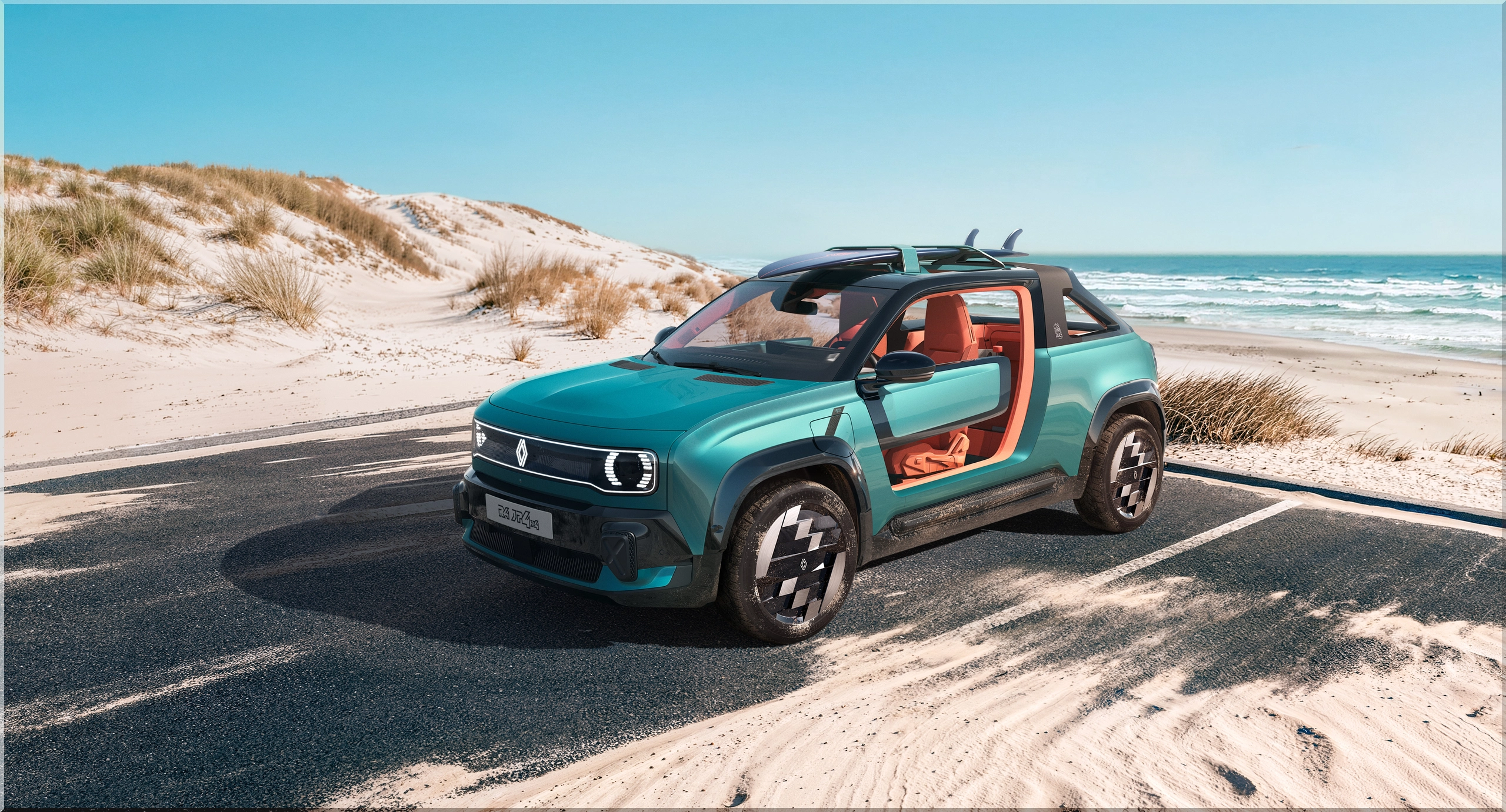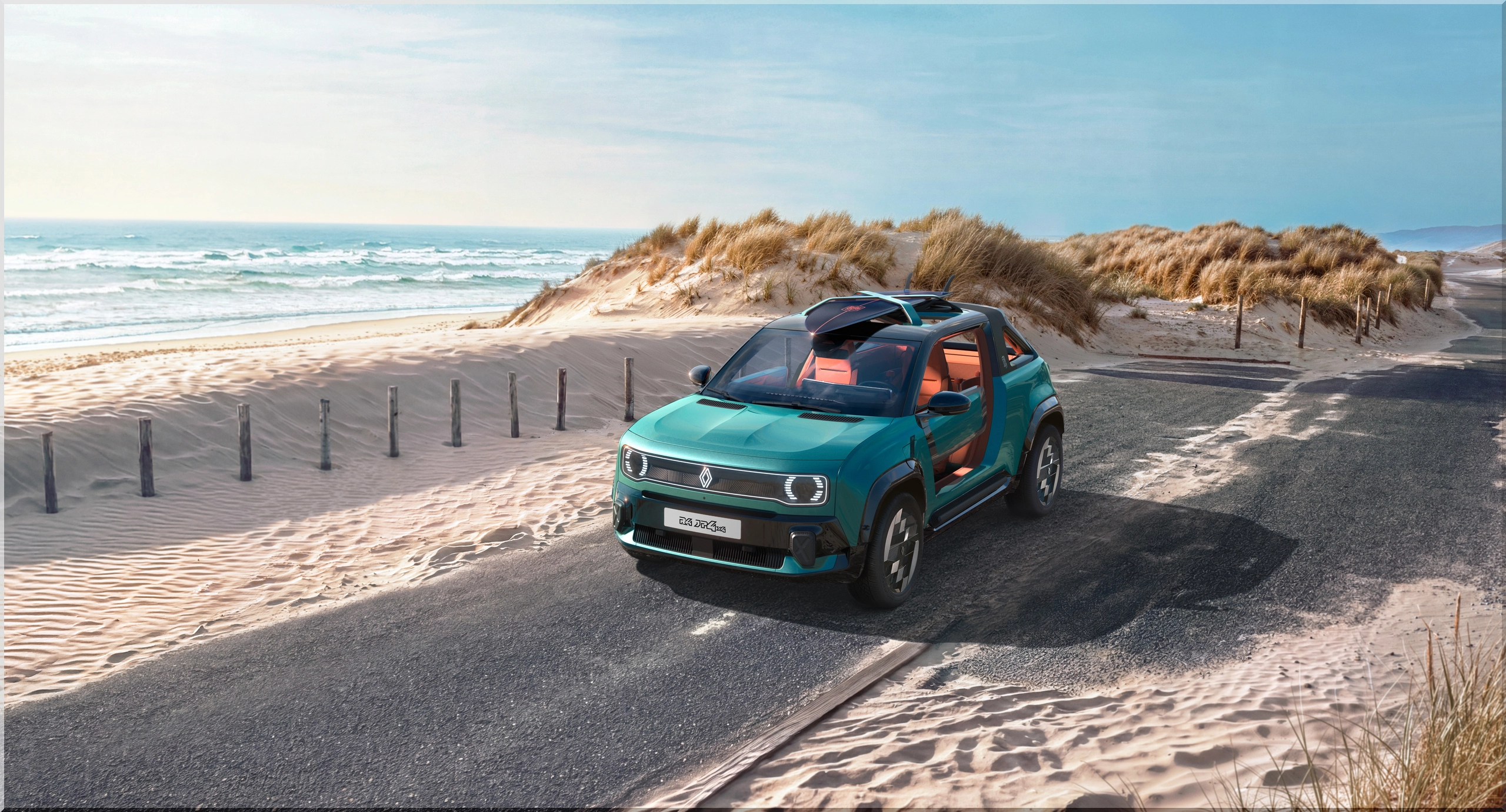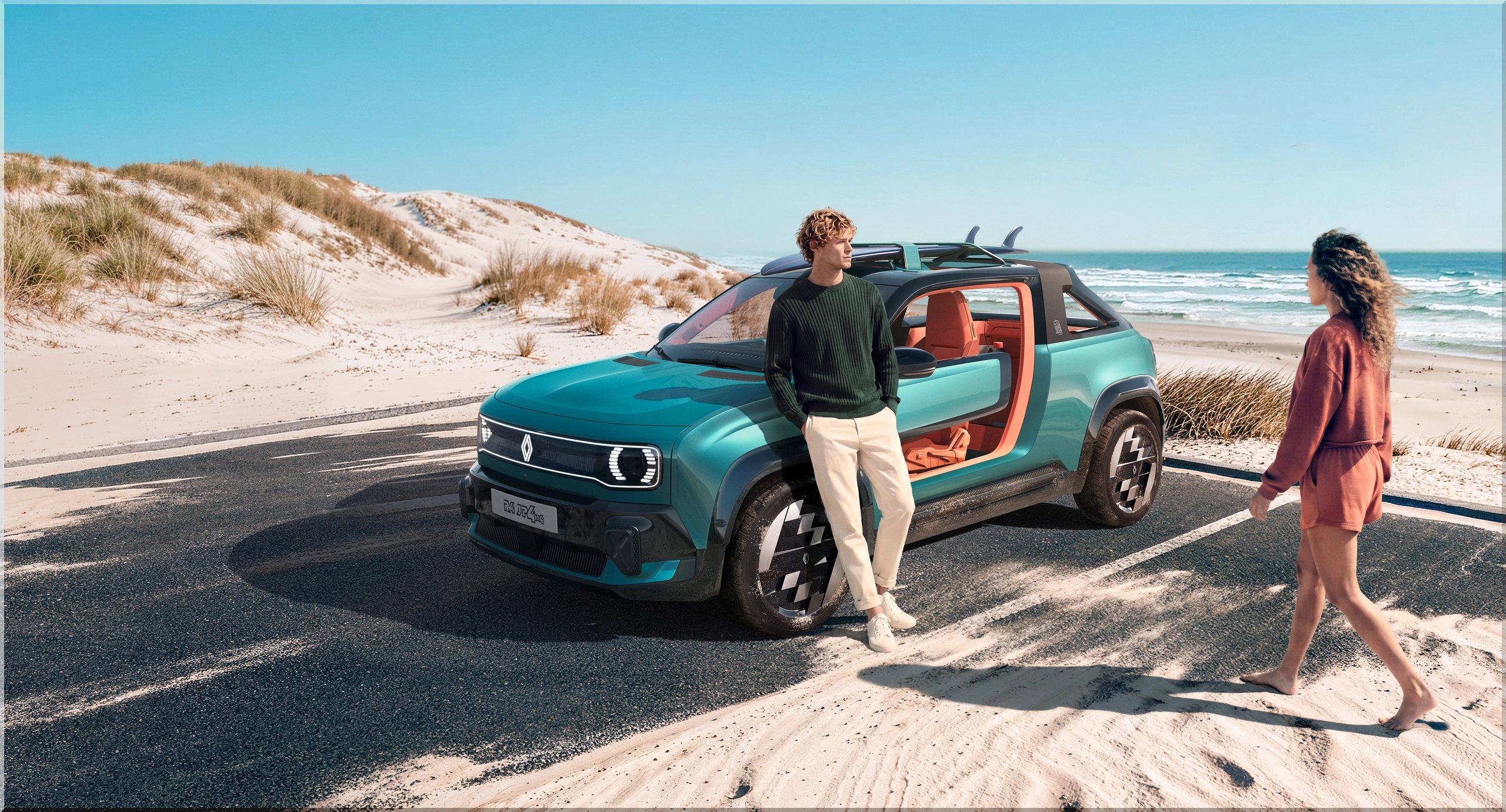


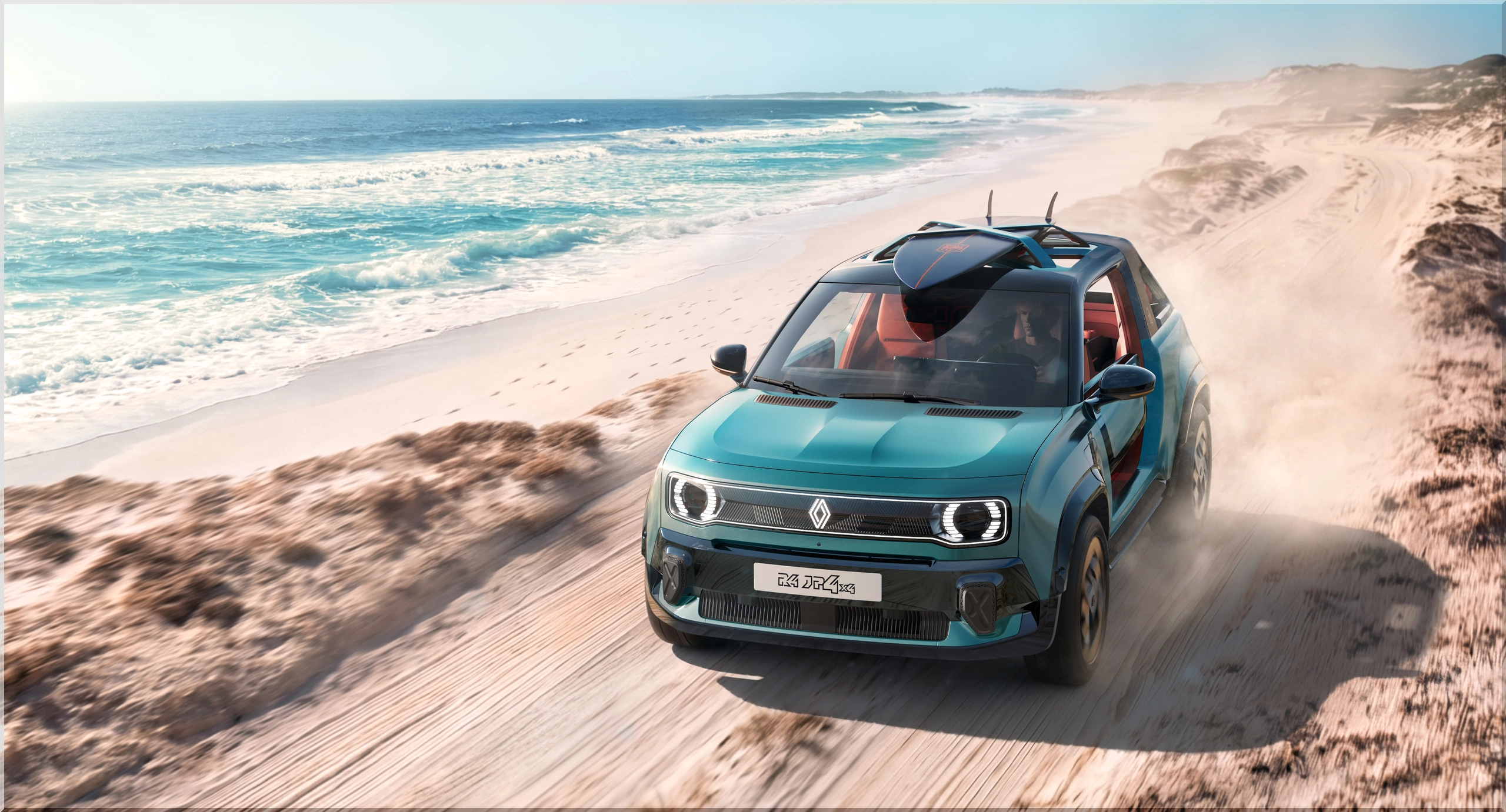
Renault used Roland-Garros 2026 to make a sharp technical point: the Renault 4 JP4x4 Concept can push the new Renault 4 E-Tech electric past city duty and into compact adventure territory. The show car takes the production R4 base, adds a rear electric motor, raises the body, widens the stance, and opens the cabin for a beach-car brief with real mechanical logic under it.
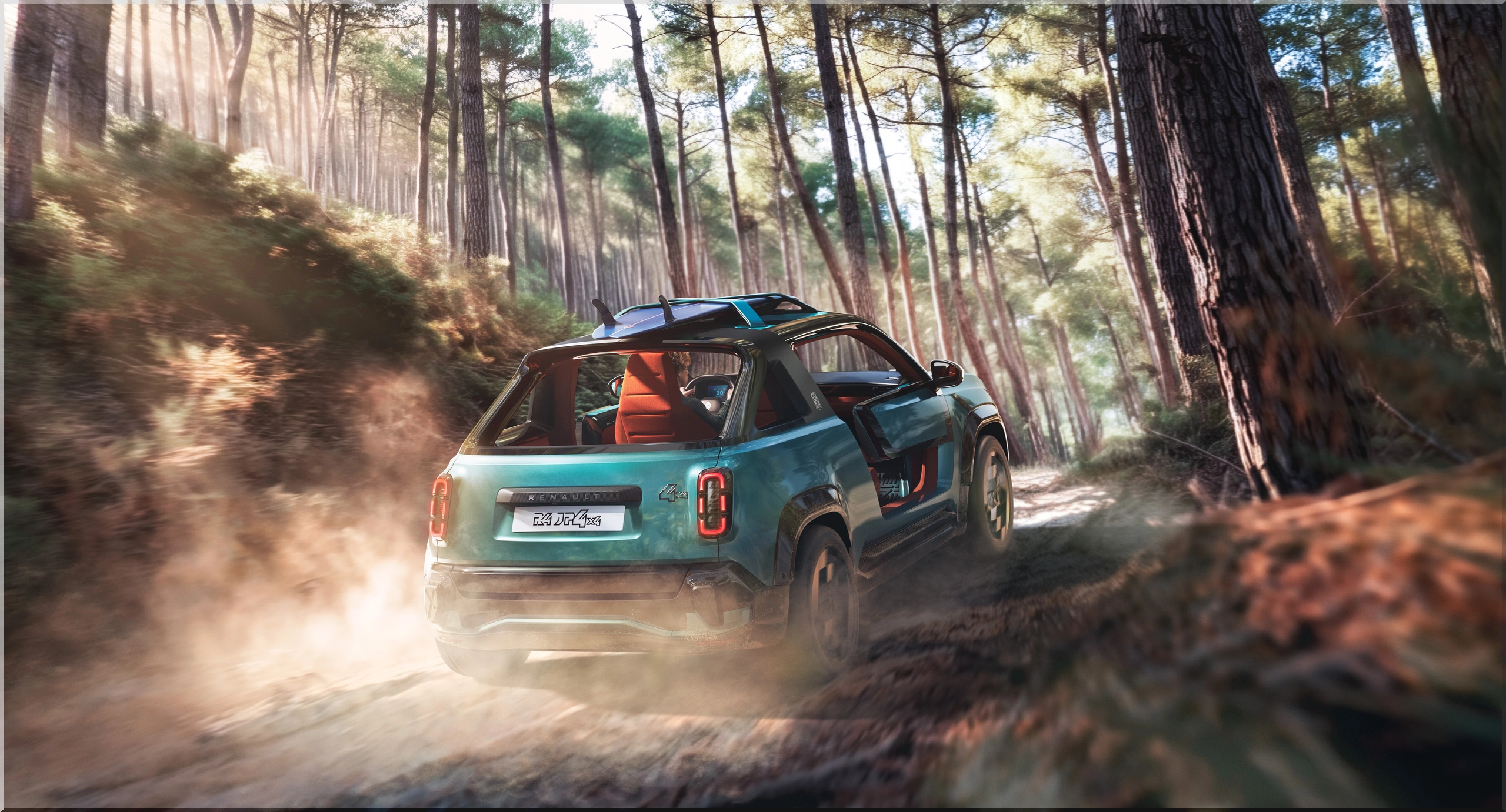
That gives the JP4x4 more value than paint and trim. Renault gives it a clear mission: sand, gravel, open-air leisure, roof-mounted boards, and fast access to gear. The electric 4x4 Renault 4 tests small-EV traction, lifestyle packaging, and retro design in one tidy package.
Renault 4 JP4x4 Concept Specs: What Renault Confirmed
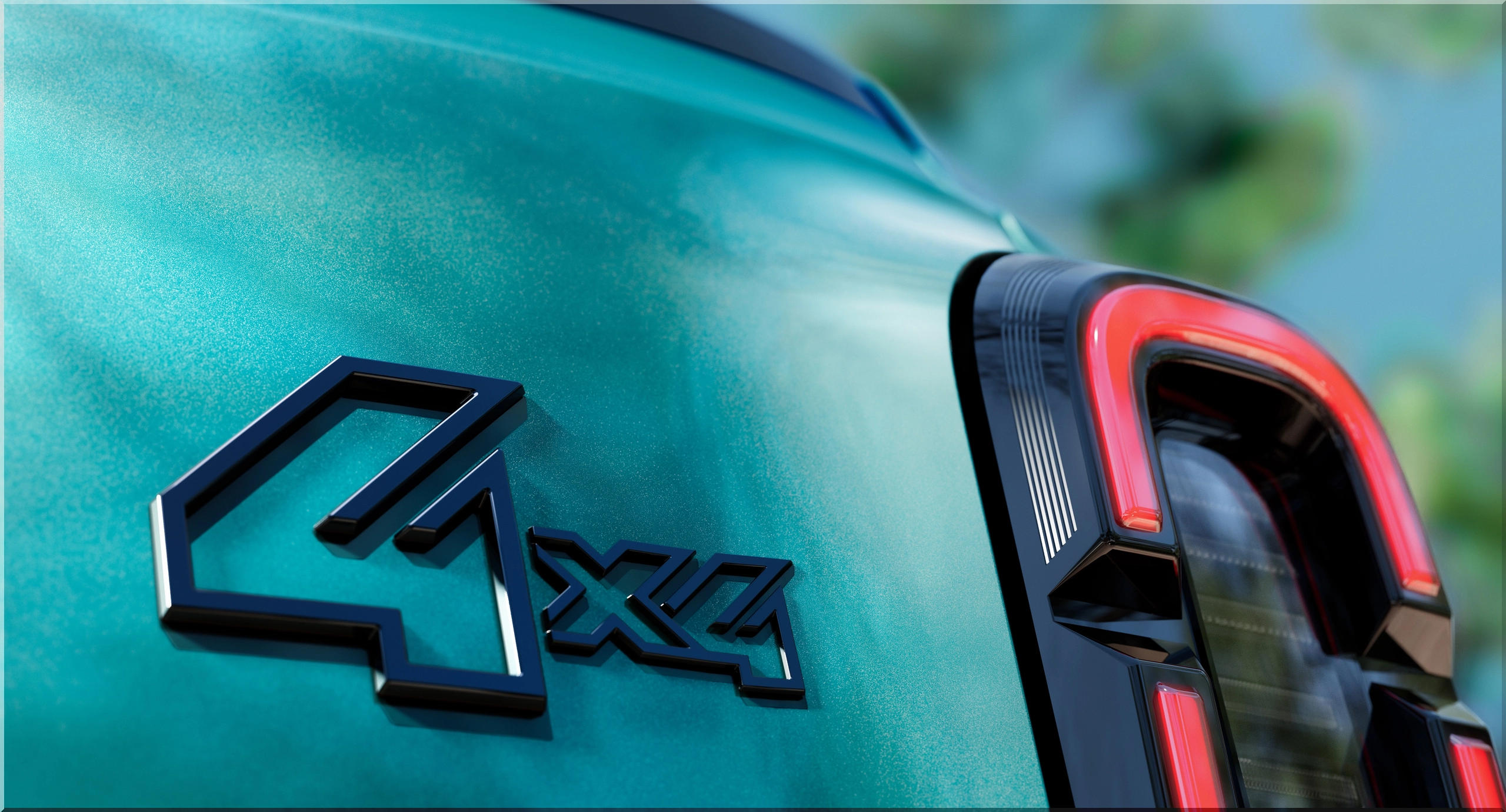
The headline hardware sits at the rear axle. The Renault 4 JP4x4 Concept uses a second electric motor at the back, giving the car all-wheel drive instead of the front-wheel-drive layout used by the standard Renault 4 E-Tech electric. In addition, Renault raises ground clearance by 15 mm, keeps the 18-inch wheel diameter, and fits 225/55 Goodyear UltraGrip Performance+ tires on specific JP4 wheels.
Renault has not published total system output, battery capacity, curb weight, charging rate, approach angle, breakover angle, departure angle, or price for the JP4x4. From an expert perspective, the bigger point sits in the package: Renault proves the AmpR Small electric architecture can carry a B-segment electric 4x4.
| Data point | Renault 4 JP4x4 Concept | Engineering read |
|---|---|---|
| Base vehicle | Renault 4 E-Tech electric | Uses an existing small EV package |
| Drive layout | Front and rear electric motors | Creates electric all-wheel drive |
| Ground clearance change | +15 mm / +0.59 in | Helps over sand ruts and stones |
| Track change | +10 mm / +0.39 in per side | Adds stance and lateral stability |
| Total track gain | +20 mm / +0.79 in per axle | Gives tires more shoulder room |
| Wheels and tires | 18-inch JP4 wheels, 225/55 R18 Goodyear UltraGrip Performance+ | Adds sidewall and loose-surface bite |
| Est. tire sidewall | 123.8 mm / 4.87 in | Cushions rough tracks |
| Est. tire outside diameter | 704.7 mm / 27.74 in | Supports the raised stance |
Why the Rear Electric Motor Makes Sense
An electric rear axle solves a packaging problem that small combustion 4x4s usually fight. A mechanical all-wheel-drive setup needs a transmission output, prop shaft, rear differential, and extra underbody space. An EV can add rear traction with a second motor, power electronics, control software, and a high-voltage link. Specifically, that approach keeps the floor cleaner and lets Renault tune torque delivery through software.
That choice suits sand. Loose surfaces reward quick torque control because wheelspin can dig the tire into the surface before the driver reacts. A rear electric motor can help the front axle pull less load during slip, while the control unit meters rear torque in milliseconds. Consequently, the dual-motor all-wheel drive layout gives the JP4x4 a practical reason to exist, even if Renault currently presents it as a show car.
The production Renault 4 E-Tech electric uses a 150 hp motor with 245 Nm of torque in its 52 kWh version. The JP4x4 likely changes total output, but Renault has not issued a combined figure.
Dimensions: How the JP4x4 Changes the Standard Renault 4
The regular Renault 4 E-Tech electric measures 4,144 mm long, 1,808 mm wide with folded mirrors, and 2,624 mm between the axles in Renault UK data. In inches, that gives a 163.1-inch length, 71.2-inch body width, and 103.3-inch wheelbase. The standard ground clearance sits at 181 mm, or 7.13 inches, before the JP4x4 adds its 15 mm lift.
That pushes the JP4x4's estimated clearance to 196 mm, or 7.72 inches. Renault takes the other path because a beach car needs useful clearance and tire sidewall more than a record drag figure.
| Measurement | Standard Renault 4 E-Tech electric | JP4x4 change | JP4x4 estimated result |
|---|---|---|---|
| Length | 4,144 mm / 163.1 in | Not stated | Not stated |
| Width, mirrors folded | 1,808 mm / 71.2 in | Wider track, not body width | Not stated |
| Wheelbase | 2,624 mm / 103.3 in | Not stated | Not stated |
| Ground clearance | 181 mm / 7.13 in | +15 mm / +0.59 in | 196 mm / 7.72 in |
| Wheel size | 18 in | 18 in retained | 18 in |
| Boot space | 420 L / 14.8 cu ft | Reworked for leisure gear | Not stated |
| Loading sill | 607 mm / 23.9 in | Pickup-style tailgate | Not stated |
Open-Air Design: Plein Air and JP4 Ideas Return
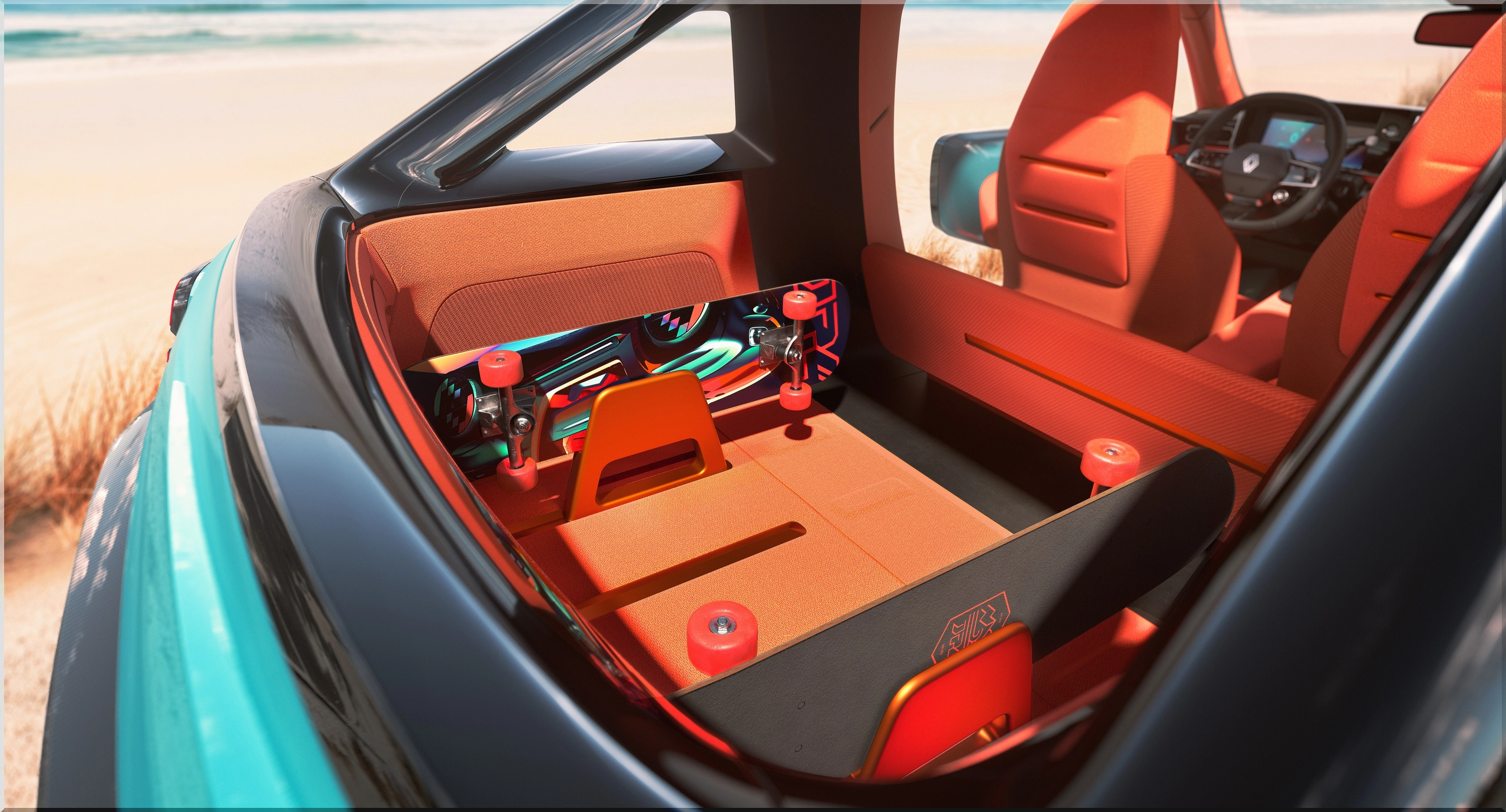
Renault pulls the JP4x4 from two older Renault 4 branches: the 1969 Plein Air and the 1981 JP4. The modern car uses minimalist doors, an open roof with a cross-shaped frame, and a drop-down tailgate that works like a small pickup panel. That layout gives the car a physical reason for its electric beach car pitch. It lets users load gear without climbing into a deep hatch aperture, and it turns the rear area into a casual cargo deck.
Cabin Details With Real Use-Case Logic
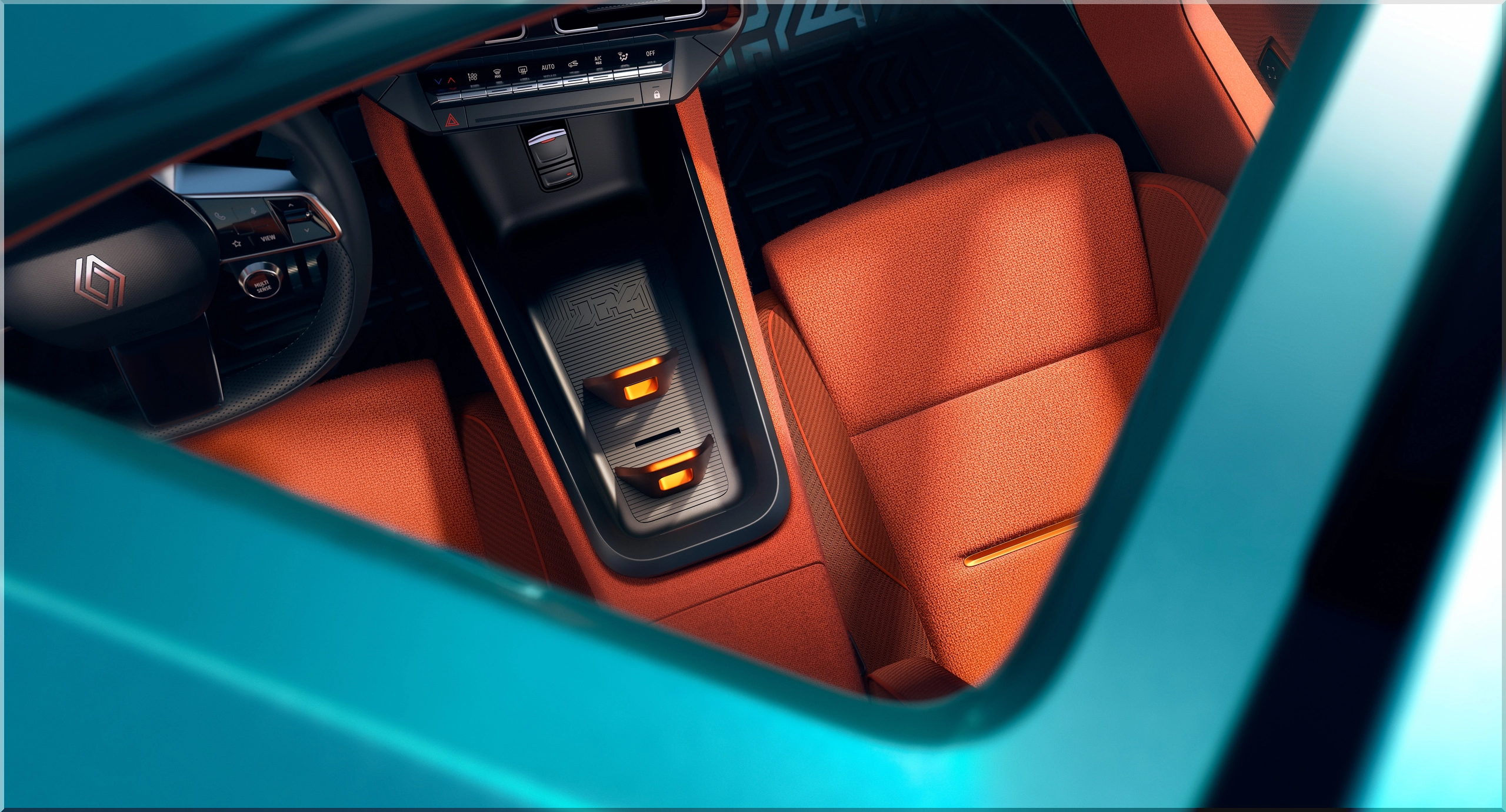
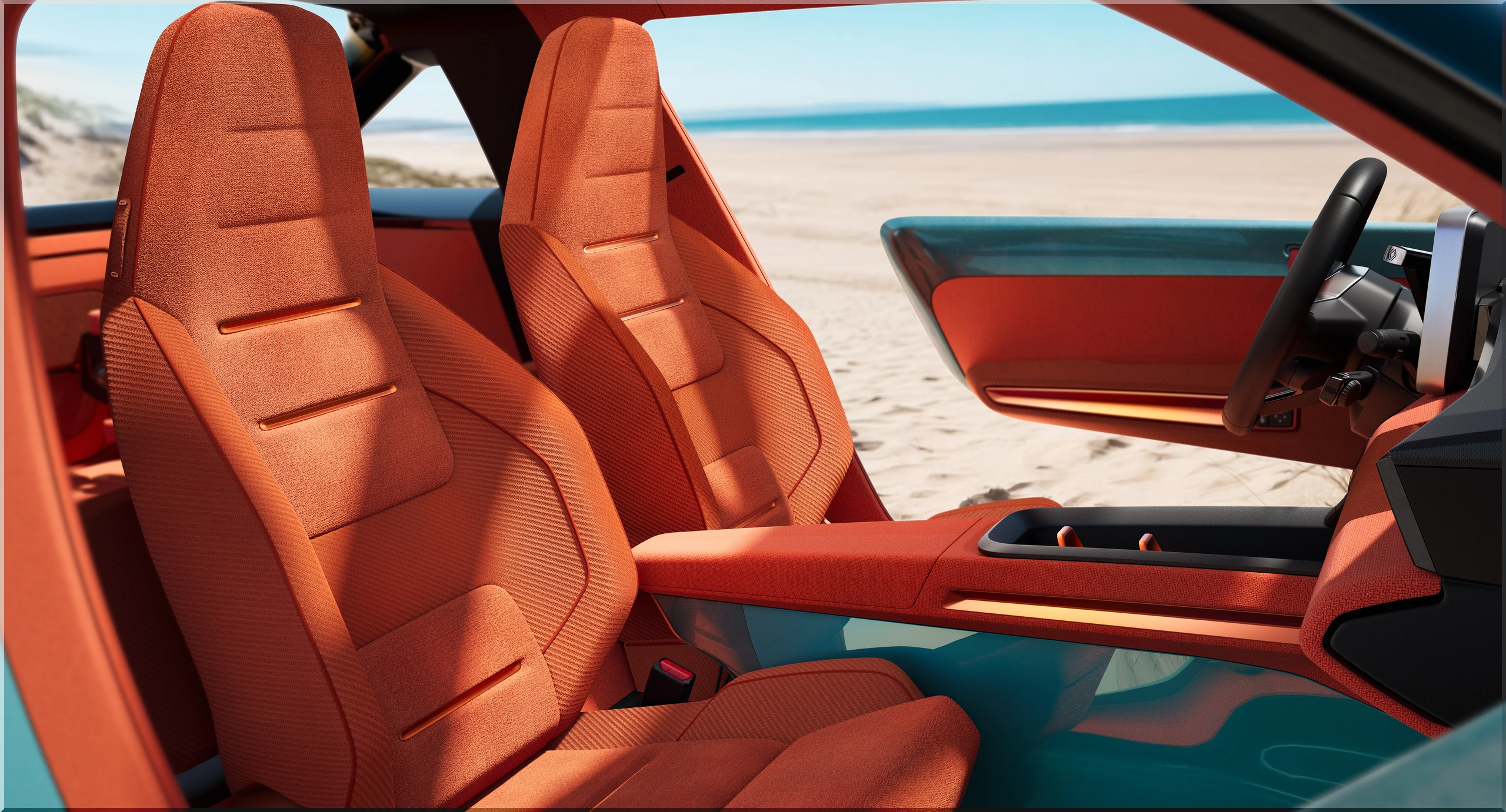
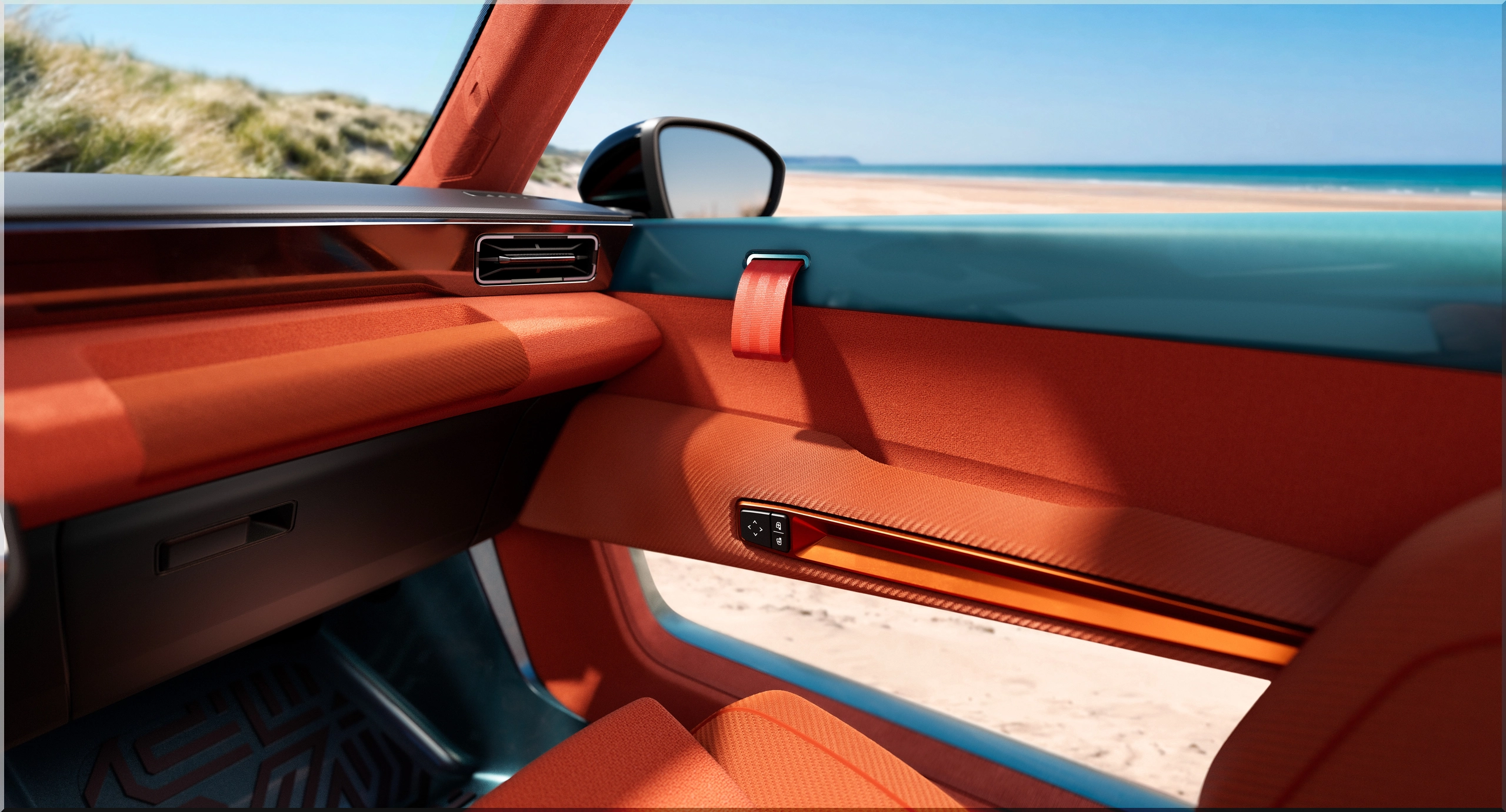
Renault uses Emerald Green bodywork and an orange interior, with the green shade referencing historic Renault 4 colors from the 1970s and 1980s. The color pairing looks loud by normal crossover rules, but the JP4x4 needs instant recognition at Roland-Garros and quick memory for anyone who knows the old Plein Air and JP4 story.
Inside, Renault fits bucket seats inspired by classic Renault "Egyptian mummy" seats with integrated headrests. The cabin also uses textile finishes on the dashboard, door panels, and boot surround. Specifically, the passenger-side grab handle gives the interior a functional off-road cue rather than a showroom-only decoration.
Why Renault Needs a Small Electric 4x4 Proof Point
Renault designed the R4 as the more practical sibling to the Renault 5 E-Tech electric, with a longer wheelbase, larger boot, low loading sill, and higher stance. The JP4x4 pushes that idea into a more profitable question: can a compact electric crossover carry real outdoor credibility without growing into a heavy SUV?
From an expert perspective, this counts in Europe. Buyers want compact EVs that fit narrow streets and older parking spaces, yet many still want all-wheel drive for snow, rural lanes, campsites, and weekend routes. A small dual-motor EV can answer that need with less weight and lower cost than a larger family SUV.
Renault 4 E-Tech Baseline: The Numbers Behind the Show Car
The standard Renault 4 E-Tech electric gives the JP4x4 its commercial skeleton. The production car offers a 52 kWh battery in Comfort Range specification, up to 150 hp, 245 Nm of torque, 100 kW DC charging, and 11 kW AC charging. Renault also lists a 15-to-80 percent rapid-charge session at about 30 minutes for the 52 kWh battery.
| Production Renault 4 E-Tech data | Figure |
|---|---|
| Battery capacity, 52 kWh version | 52 kWh |
| WLTP range, best 52 kWh version | Up to 409 km / 254 miles |
| Maximum power | 150 hp / 110 kW |
| Maximum torque | 245 Nm / 181 lb-ft |
| DC rapid charging | Up to 100 kW |
| AC charging | 11 kW |
| 0-62 mph | 8.2 seconds |
| Top speed | 93 mph / 150 km/h |
| Kerb weight, UK spec | 1,462 kg / 3,223 lb |
| Braked towing limit | 750 kg / 1,653 lb |
| Boot capacity | 420 L / 14.8 cu ft |
Pricing Context: What a Production JP4x4 Would Need to Beat
Renault lists the JP4x4 as a show car, so it has no official price. Still, the production Renault 4 gives useful context. In the Netherlands, the entry Renault 4 E-Tech electric starts at about $34,550 when converted from the published local price using the latest European Central Bank euro-dollar reference rate. Renault also lists the French Plein Sud open-top version from about $43,410 after the same conversion.
Should Buyers Wait for a Renault 4 JP4x4 Production Model?
Do not plan a purchase around the JP4x4 yet. Renault identifies it as a concept and has not announced production. Buyers who want open-air driving can look at the Renault 4 Plein Sud, while buyers who want traction should watch the Savane 4x4 and JP4x4 concepts for signals about a future all-wheel-drive R4.
Pro-Tips:
- Watch for total system output, battery size, and WLTP range before judging any production 4x4 version.
- Compare tire width and ground clearance against the standard R4, because those two changes will affect ride, range, and traction.
- Use the rear motor as the key feature. Without it, a beach-themed R4 would lose the main technical advantage.
- Check cargo access carefully. A pickup-style tailgate looks fun, but daily users need weather sealing, load height, and rear visibility data.
- Use the standard 52 kWh R4 as the reference point. Any 4x4 variant should justify extra cost with measurable traction value.
Final Verdict: A Small EV With Real Strategic Weight
The Renault 4 JP4x4 Concept works because it links nostalgic design with a credible electric drivetrain idea. Renault does not simply add flared arches and call it adventure. It adds a rear motor, raises clearance, widens the stance, and fits tires that support the use case.
The smarter play sits under the bodywork. Renault shows that a compact EV architecture can support front-drive city use, open-air lifestyle versions, rescue-use demonstrators, and dual-motor leisure cars from the same base. By comparison, many small EVs still chase the same hatchback brief with different lamps and screens.